You do the work. Loopletter tells the story.

Loopletter turns what you and your AI get done into short, genuine letters for your clients and your team. It learns what each reader cares about. You read, approve, send.

No setup. Your first letter in two minutes.

Logs for you fromand any assistant that speaks MCP

“So what did you actually do this week?”

Your work used to show. Hours, commits, long nights. Now you and your agents ship in an afternoon what used to take a week, and the people who pay you or depend on you see less and less of it.

What they don’t see is the part that matters: the call you made, the problem you caught, the option you said no to.

You could write it down. On Friday evening, from memory, in a status report that ends up saying “various fixes”. Or you could let it get lost.

Doing great work is no longer enough. It has to be told.

Three steps. Only one of them is yours.

  1. It notes as you go.

    Your assistant (Claude Code, ChatGPT, Cursor) logs what just happened and why, the moment it happens. Or drop a screenshot, a voice note, a line. Ten seconds, never from memory.

  2. It writes the letter.

    Daily, weekly or for the whole mission. Short, in your voice, with the links, numbers and screenshots intact. Nothing invented.

  3. You send it.

    Read it, change a word if you like, send. Readers get it by email and reply from their inbox. No account, no new app.

Works with the assistant you already use. We never ask for access to your code.

It learns who it’s writing to.

Any AI can summarize your notes. Loopletter remembers your reader. Your client wants dates before details. Your team cares about what unblocks them. Your manager skips refactors. Every edit you make and every reply you get teaches the next letter.

1

Where things stand

Every letter opens with the one thing your reader needs to know.

2

The why, not just the what

The call you made and the option you said no to, in a sentence your reader gets.

3

It remembers

“Last time I said Thursday. It shipped Wednesday.” Each letter picks up the story.

Your first letter is good. Your fifth one sounds like you wrote it on a good day.

This is what your client reads on Friday.

Weekly update · Friday, October 9

The new checkout is live

The new checkout went live on Wednesday, a day before the Thursday date. Mobile customers no longer get stuck on the card step. You can try it here.

The card step was where about one in eight mobile customers dropped, so I started there. I switched it to Stripe's own payment form instead of building ours: half the time, and Apple Pay comes for free. Ours would only have looked nicer.

On Tuesday I tested it on 6 phones, iOS and Android. All went through, Apple Pay included.

Paying on a phone

Receipts now go out with each order, with the refund policy you sent.
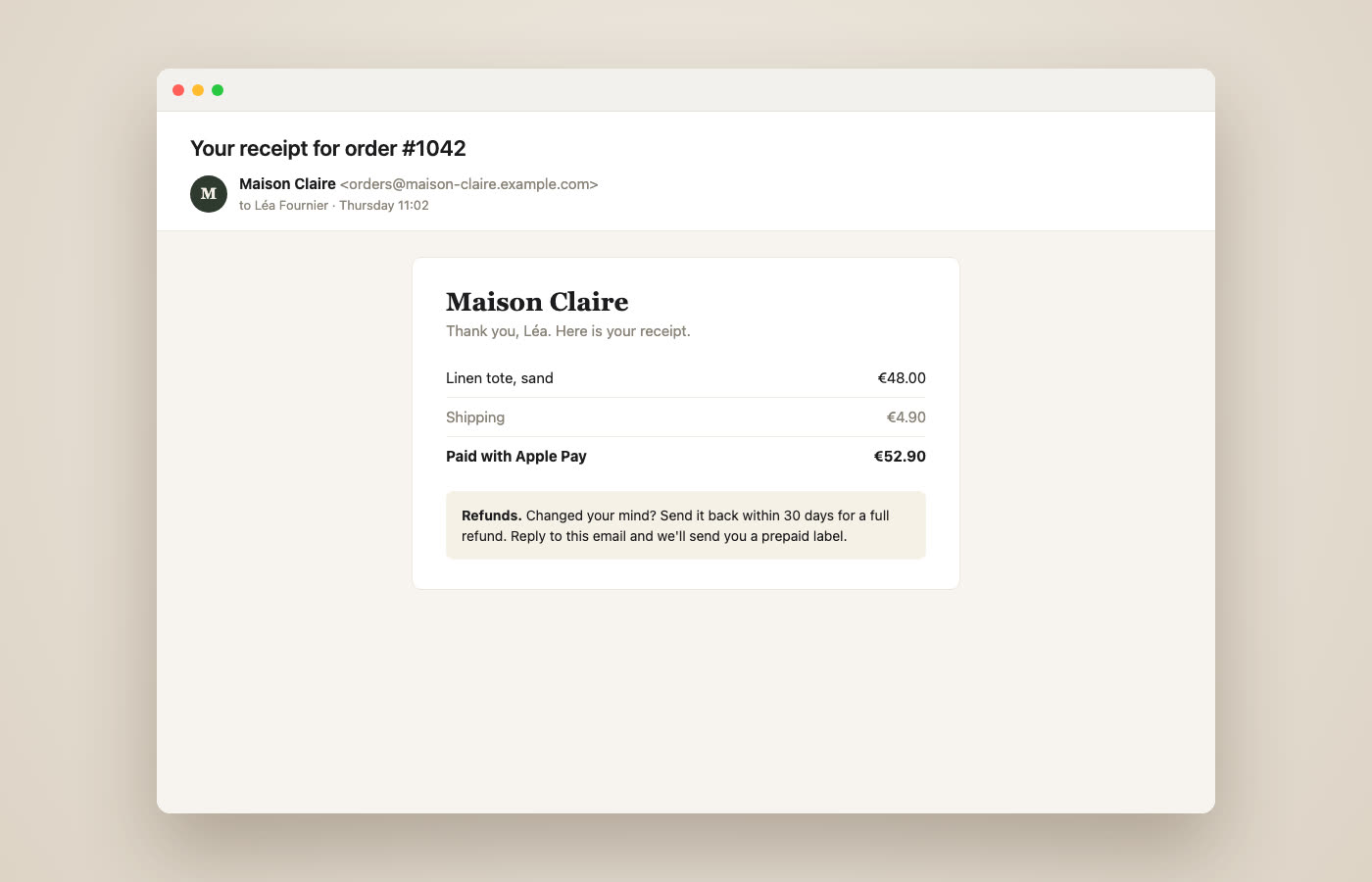
The new receipt
The new receipt

Next week: order confirmation emails, then the admin export you asked for.

Until next week,Nina

Written by Loopletter from a week of Nina’s notes, not a word changed. Nina and Claire are made up; the letter isn’t.

One letter. Wherever they read.

You write it once. Each reader gets it the way they already work.

Their inbox

From your name, the whole letter in the email. They reply like to any email, and you answer from yours.

A web page

Public, with a link, or for its readers only. Replies and reactions on each paragraph.

Slack

Pasted as a message, bold title and links kept, with a link the whole channel can open.

LinkedIn

Plain text, ready to post. Your work in public, without writing it twice.

PDF

PDF

For the mission recap you attach to the invoice.

Markdown

For a blog, a README or your notes.

For people who do more than they show.

Freelancers and consultants

Make renewals easy

Your client sees the judgment behind every invoice, not just the hours.

Studios and small agencies

A letter for each client

One week of work, one letter per client in its own tone. You read and approve each one.

Remote teammates

Be seen without a meeting

Your team knows what you carried and what you unblocked, without a standup.

Your notes stay yours. Only letters leave.

  • Nothing goes out without you. You approve every letter before anyone sees it.
  • No access to your code. No GitHub, no repositories. Fine under an NDA.
  • Private by default. What you log is for you. Hide a project or give a client an alias in one click.
  • Not a tracker. Team letters are built from what each person chose to share, never from their notes.

Hosted in the EU. Download everything or delete your account at any time.

One plan. Everything in it.

Loopletter€9a month

or €90 a year (two months free)

All the readers you need. Daily, weekly, monthly and custom letters. Email, web page, Slack, LinkedIn and PDF. Replies and reactions. Your assistant connected.

Readers never pay and never need an account.

Try it with a sample week

You did the work. Let them see it.

Your first letter is two minutes away.

Try it with a sample week

Questions

Will it sound like AI?

No hype, no filler, no “I’m thrilled to share”. It writes short and plain, in your voice, and gets closer to it with every edit.

Will it make things up?

No. Every sentence comes from what you or your assistant logged. Links, names and numbers stay exactly as they were.

Do I need to use an AI assistant?

No, but it’s the easiest way. You can also type a line, drop a screenshot or record a voice note.

What do my readers need?

An inbox. They read the letter in their email or on its page, and reply like to any email.

Can my client see my notes?

Never. Only the letters you approve leave Loopletter.

Can I use it for several clients?

Yes. One week of work, one letter per client, each with what matters to them.

Is there a limit?

Fair use only: up to 500 emails a day and about 150 drafts a month, far more than anyone writing their own letters needs. See the terms.